
Free 6 Week Program
6 week Armwrestling training program
Intro:
There are many different ways to train for armwrestling. I am not claiming the method provided below is the best possible way, but I do believe it is a good start for most people, and it will help you make a lot of progress. There will be lots of opportunities for you to add in your own favorite exercises, and make equipment substitutions when needed. I hope this is helpful for you!! Happy training!!
Program division:
This program will be divided based upon weekly volume, and 5 training categories: side pressure, back pressure, cupping, pronation, wrist rise. An optional weekly regime will be provided, but as long as you are getting in the same amount of volume over the course of the week, which days you do which exercises on doesn’t matter that much.
Daily structure:
The daily structure will consist of 1 top set, 1 back off set, and then 3-6 volume sets. This will. For every single top set, you will leave 1-2 reps in the tank. Of course this will require an estimate, but that’s okay, just do your best. It’s not gonna ruin your gains if you misjudge slightly now and again.
For your top and back off set, every single exercise in the program will be an isometric lift. This means that you are going to “lock and lean.” If you are training for back pressure for example, don’t actively curl your arm, rather, lock your elbow in place, and lean back with your entire body. For the volume sets, you will be doing dynamic movements. This means that you would actively curl your arm in the previous example, or in a cupping exercise you would bend your wrist, instead of simply keeping your wrist locked in place and leaning back with your body.
Periodization:
This program will follow a daily undulating periodization structure. What on earth does that mean? Daily undulating periodization or DUP simply means that rep range changes every day, and in a more sporadic fashion. This is contrasted to the more common linear periodization, where the rep range changes in a more expected linear pattern. For DUP, you might do sets of 12 day 1, then sets of 8 day 2, sets of 10 day 3, sets of 15 day 4, etc. When implementing linear periodization, your routine would look more like this: sets of 12 on day 1, next session sets of 10, then sets of 8, then sets of 6, 4, etc. Why DUP over LP? Both approaches have been shown to be effective, but I prefer DUP. Why? Because I think it’s less boring, and it’s easy. DUP has appeared to yield greater strength gains when compared to LP in trained athletes according to certain studies, but in general, either method will work, especially for beginners. I think DUP is fun because it’s less predictable, and it is super easy to set up, because you don’t have to worry about calculating percentage of 1rm, and knowing how much weight to move up, etc. For the top set on a given day, just think about it like this. Load some weight onto the bar that you can lift somewhere between 2-20 times. Do as many as you can leaving 1-2 reps in the tank. Next session, either move up in weight or down in weight. It really doesn’t matter by how much, just change the the weight to something. Once you hit a particular weight for your top set, you will never hit that exact weight again until the 6 weeks is over. Then, you can repeat that weight again and go for more reps than last time.
Changing weights:
I already touched on this in the previous section, but I want to make it a little more concise. You have 2 rules. Rules number 1, never use the same weight twice in a 6 week block. Rule #2, keep it in between 2 and 20 reps. This only applies to your top set. I don’t care what you do for volume.
Equipment:
There are 4 things that you probably need in order to use this program. Some form of weights, a cupping handle, a pulley system, and a karate belt. None of these things have to cost very much money. I have budget recommendations for all of these things in the gear section of the website.
Deload:
At the end of every 6 week block, before repeating, you should deload. There are a ton of different ways to deload, but the easiest way is to simply train once that week instead of twice. You don’t have to stop cold turkey, but give yourself a little break from intensity.
The Program:
Day 1: cupping and side pressure
Top set: Isometric side pressure from a high pulley with a cupping handle: 2-20 reps, change weight every session, never repeat weight in a block.
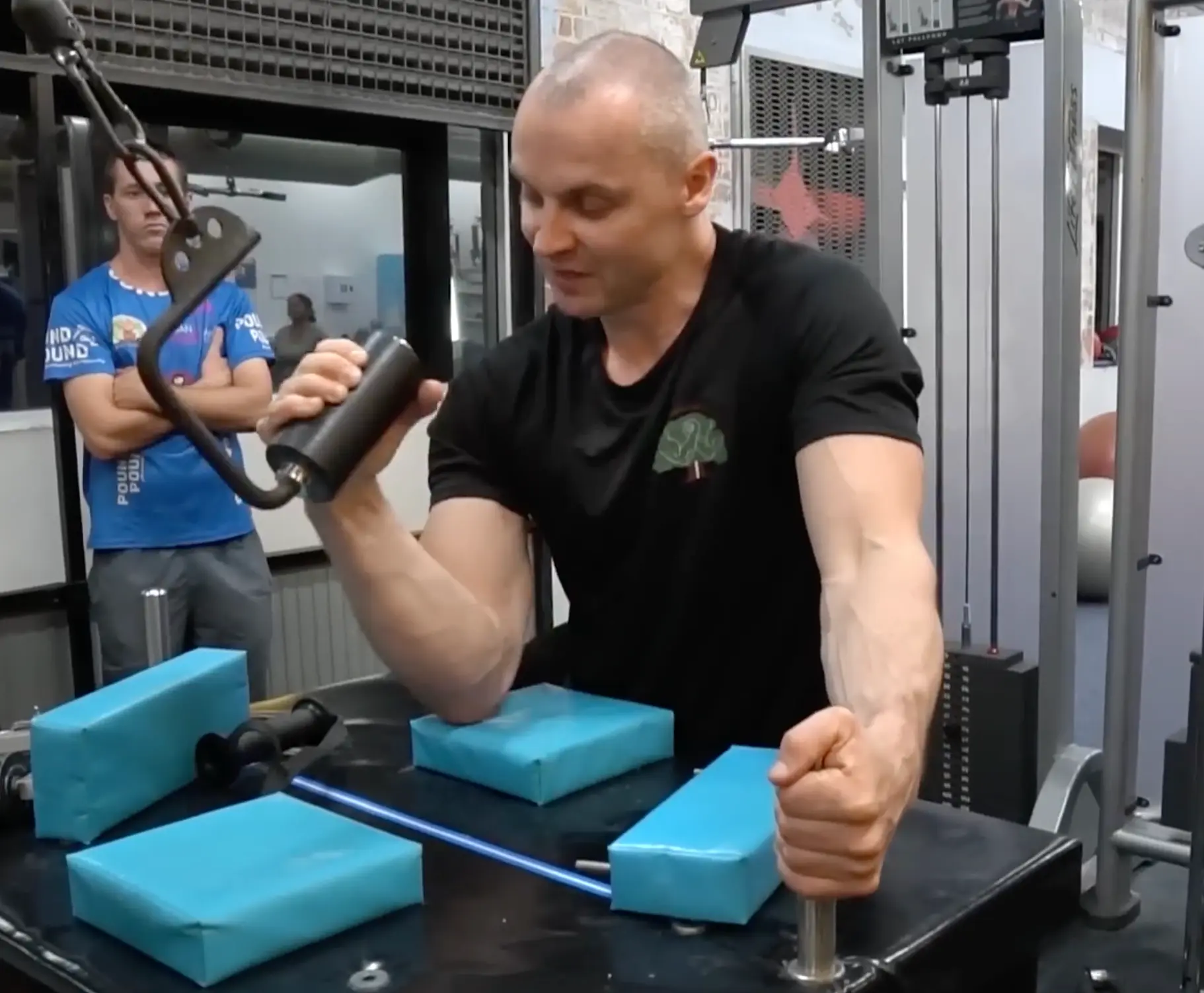
Back off set: same exercise, but drop the weight 10-15%.
In this video: Side Pressure Training With Janis Amolins Janis Amolins does an awesome job of demonstrating different ways to train side pressure. Which variation should you use? Whichever one you like the most and feels the most like armwrestling to you. As long as it is an isometric variant, go for it.
Volume: 3 sets of dynamic side pressure and cupping
For volume, take the exact same setup, simply switch the exercise from isometric to dynamic. Obviously this will require you to drop the weight. Instead of “locking and leaning” actively cup your wrist, and actively internally rotate your arm, and then control the negative portion of the lift. Think of this as the bodybuilding portion of the workout.
Day 2: pronation, back pressure, and wrist rise
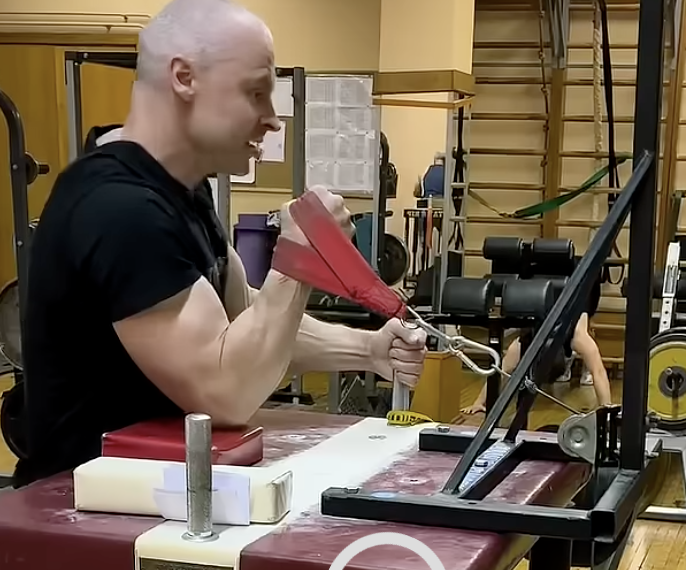
Top set 1:
Pronation back pressure from a low pulley. 2-20 reps, change weight every session, never repeat weight in a block.
Top set 2: Wrist Rise Back pressure:
The same rules apply for the 2nd top set as the first. This exercise can be performed off of the floor as shown here, or using a pulley system and a table if you’re a normal human ;)
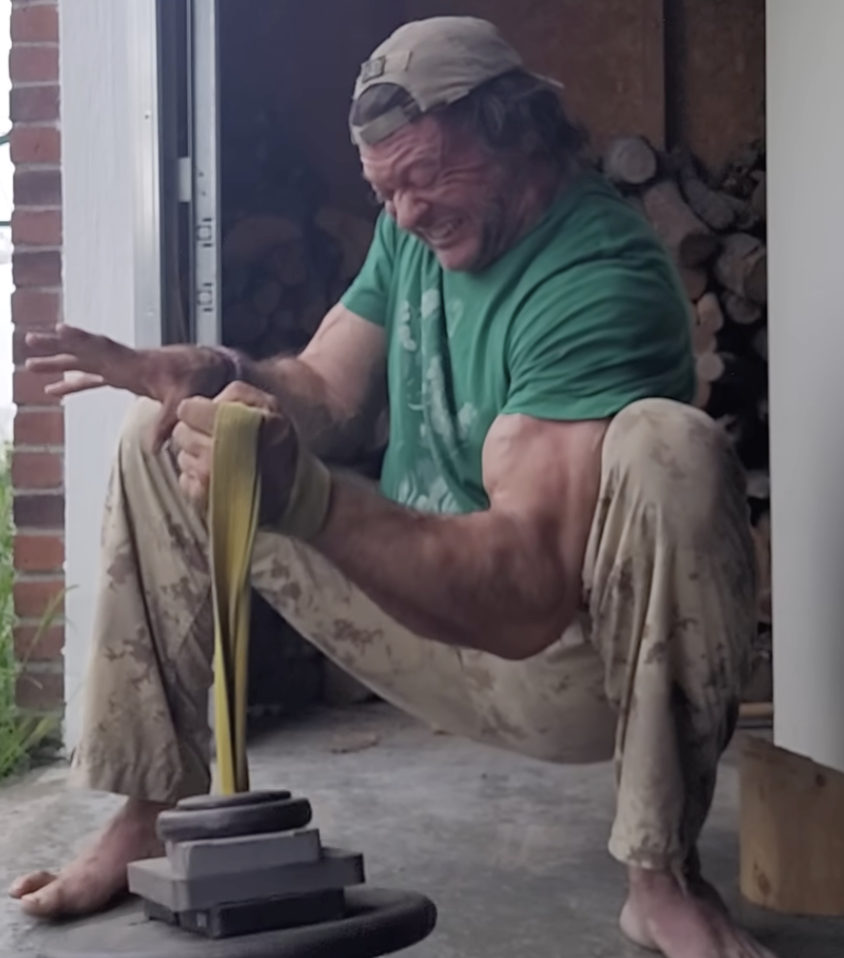
Back off sets: repeat the same exercise for both top sets at a 10-15% weight reduction.
Volume: 3 sets of Pronation curls: use the same set up you used for pronation, but once again, drop the weight and change the isometric exercise to a dynamic one. Control the weight, actively curl your arm and spin your wrist. I personally don’t find dynamic volume to be as helpful for wrist rise, but you are welcome to incorporate this as well! Just be mindful of your total elbow flexor volume if you do 3 sets of both.
Day 3: balance
Volume: 3 sets external shoulder rotation
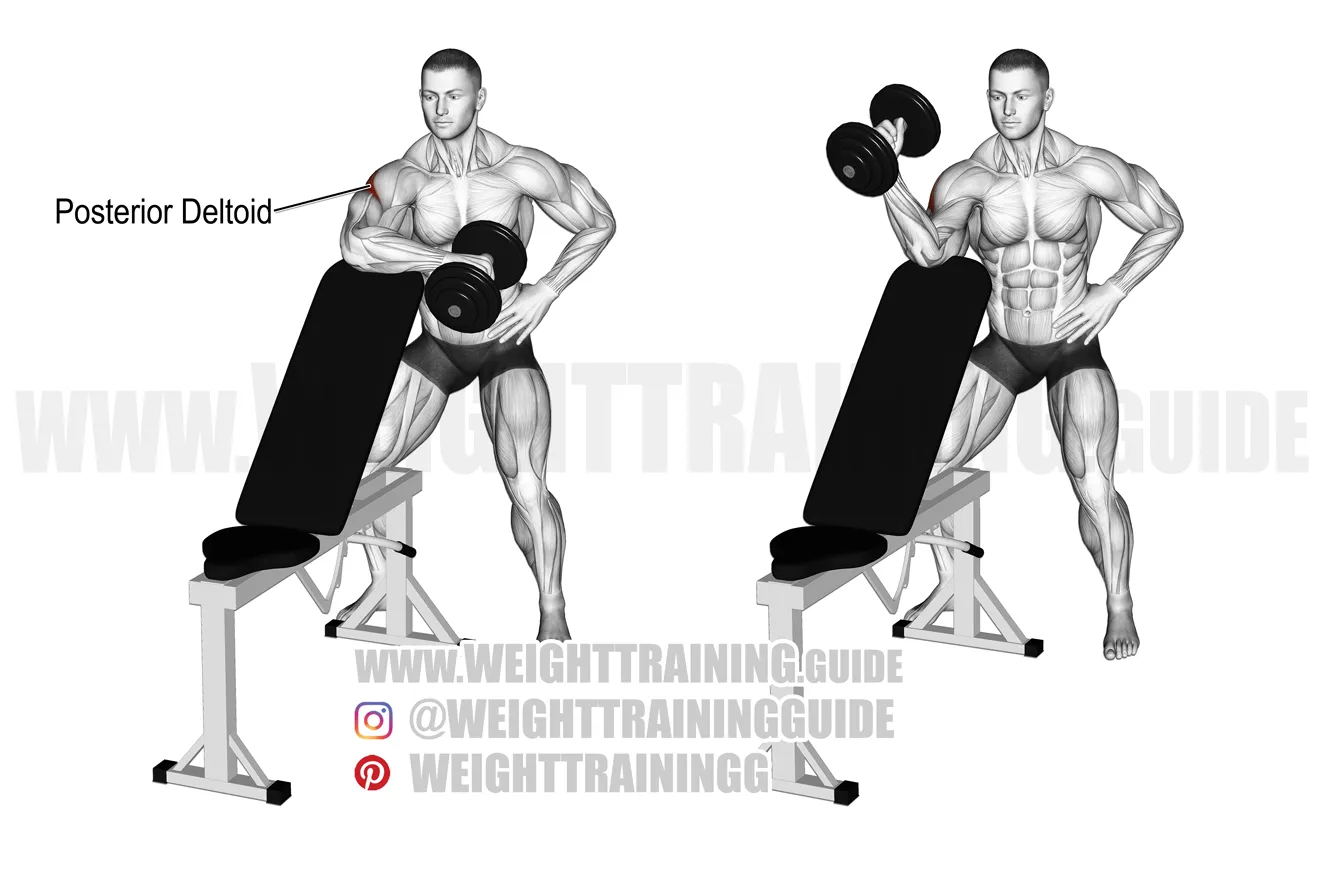
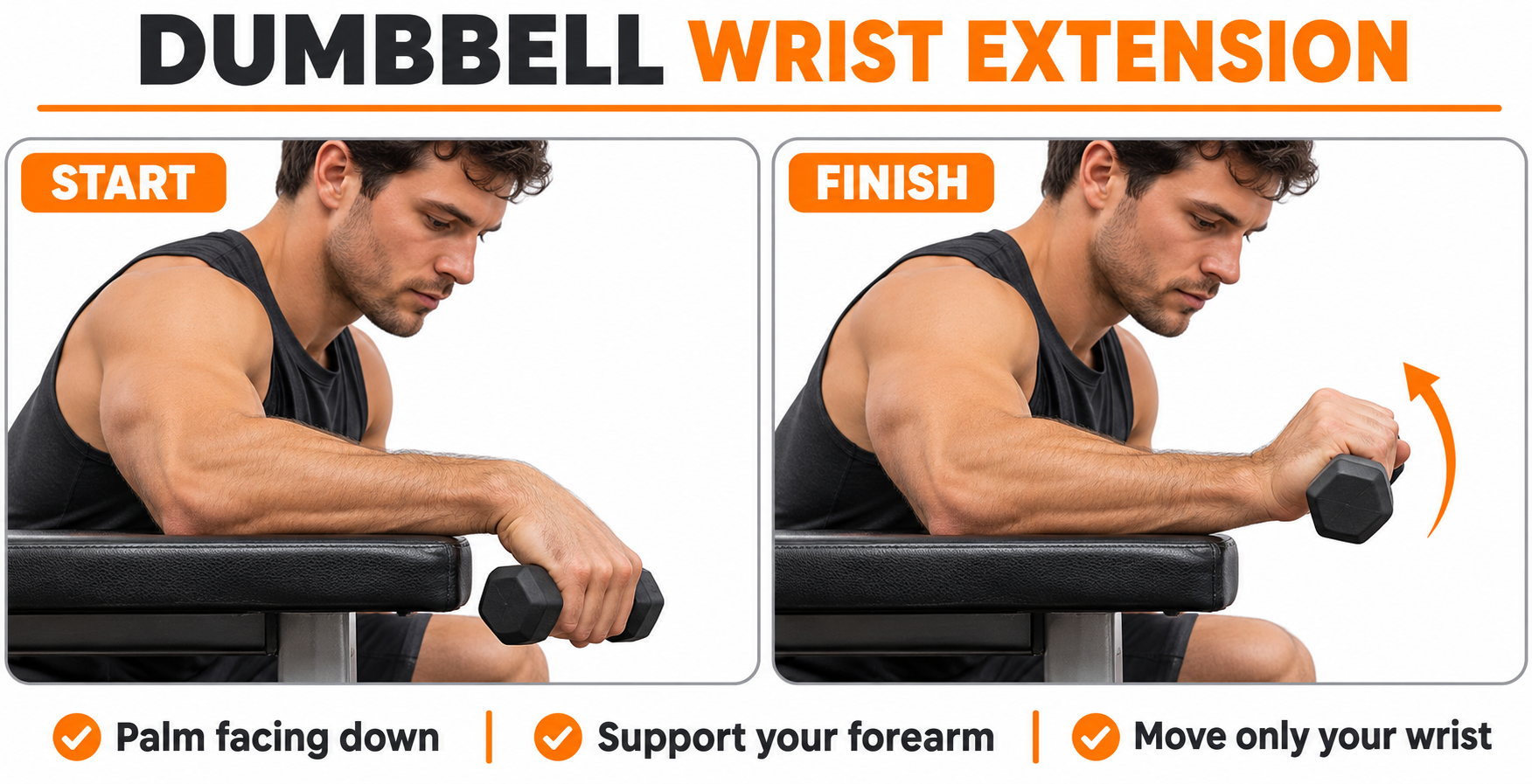
3 sets wrist extension Often times armwrestlers are not so great at maintaining balance. If you do a ton of lifting in one direction, it can be a good idea to do lifting in the opposite direction. The big 2 are external shoulder rotation, and wrist extension. Do a few sets of 20-30 reps a couple times a week and you should be fine.
Day 4: repeat
That’s all there is to it! Once you understand DUP, you can easily adjust your weights and reps for the following sessions in the 6 week block.
Final thoughts:
Everyone is different. If you are feeling super sore all the time, maybe back off on the volume. If you are recovering fine, and want to do more, add another set and see how you feel. This program also does not address how to incorporate table practice. I know that some people don’t have access to that at all, and some people’s access varies. In general, if you train hard on the table, good luck training hard in the gym that same week. Just listen to your body, and you should be fine. As I said earlier, I am not claiming that this is the best way to train, or that this program is better than other programs. This is a free option that is available to you if you want it! If you don’t want to use it, no worries! Thanks guys, happy gains!!
Comments (0)
Loading comments…